
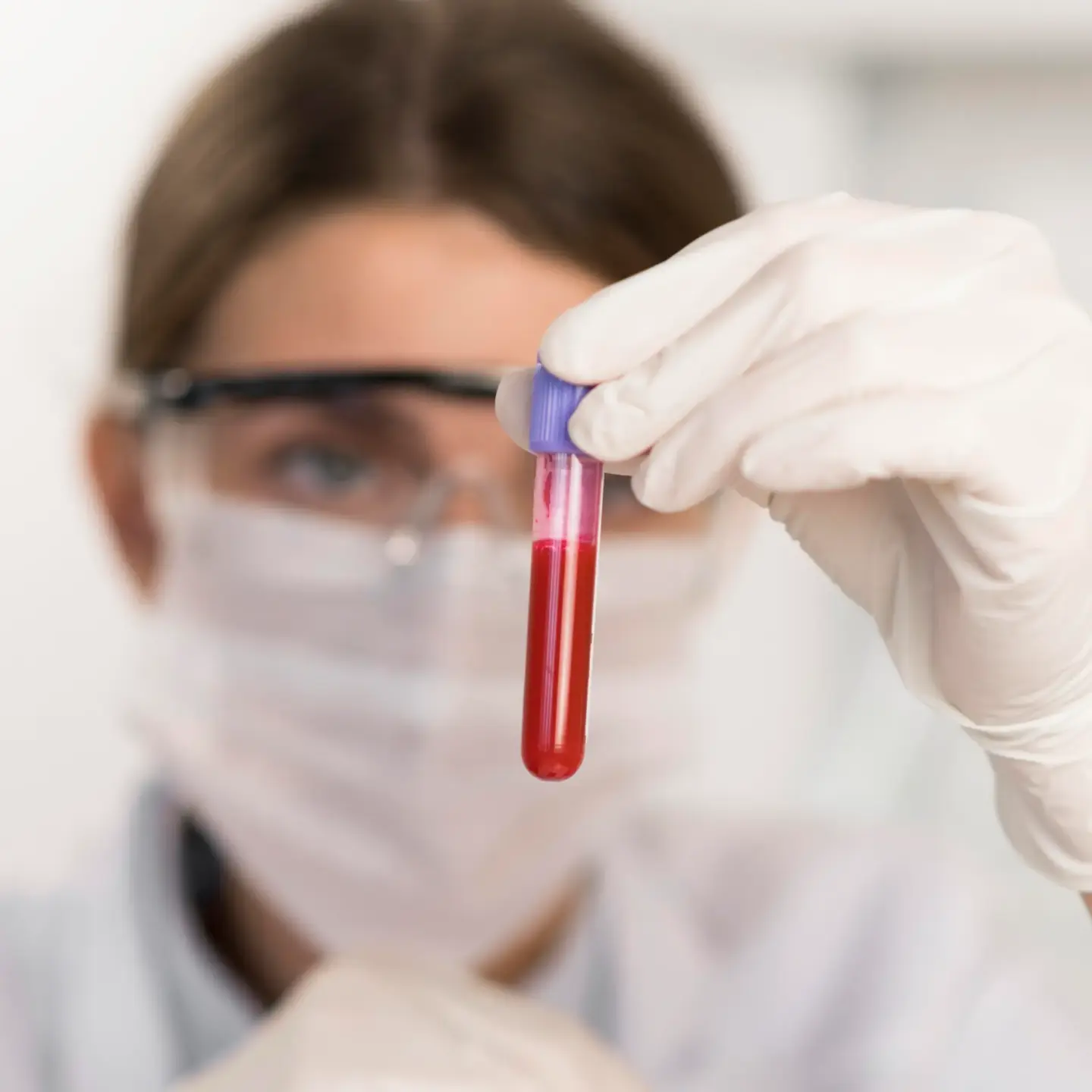
The time it takes to receive blood test results typically ranges from 24 hours to a couple of weeks. Specific timeframes depend on various factors, like the day you had your blood taken, the type of blood test you’ve had, and the lab that’s processing your blood work.
Whatever the reason for having your blood taken, it’s understandable you’ll want to wait as little time as possible for a result and to find out what’s next for you and your health.
To help clarify things, we explore how long it takes to process blood tests, the factors that could delay a response, and if there’s anything you could do to move the process along.
What’s In This Guide?
Quick Look: How Long Does It Take To Get Results For Common Types Of Blood Tests?
When you get a private blood test from Blackpool Express Chemist, you can typically expect your results in the following timeframes…
| Type of blood test | How long results take | How long results take |
| Full blood count | Often within 2-3 days | Measures the number of blood cells in your blood to check conditions like anaemia. |
| Testosterone (basic) | Often within 2-3 days | Reviews the amount of free testosterone, luteinising hormones and follicle stimulating hormones in the blood. |
| Testosterone (advanced) | Often within 2-3 days | Checks key testosterone markers, as well as kidney and liver function, and prostate profiles. |
| Testosterone (enhanced) | Often within 2-3 days | Our most comprehensive testosterone blood test that measures the same biomarkers from the advanced test and an extra six others. |
| Blood glucose (HBA1C only) | Often within 2-3 days | Checks average blood glucose level over the last three months. |
| Heart health | Often within 2-3 days | Reviews total cholesterol (high and low density lipoproteins) and other markers, like inflammation, to assess your risk of heart disease. |
| Liver health | Often within 2-3 days | Measures enzymes and proteins to check how well your liver works. |
| Urea and electrolytes, or renal panel | Often within 2-3 days | Checks the amount of different substances, e.g. , sodium and urea, in your blood to see if they’re causing symptoms. This does not include potassium levels, due to instability. |
| Lipid profile | Often within 2-3 days | Gauges your cholesterol level to understand the risk of strokes and cardiovascular diseases. |
| Total protein test | Often within 2-3 days | Measures protein in your blood to check for problems with your liver or kidneys. |
| Thyroid stimulating hormone | Often within 2-3 days | Checks thyroid hormones to check for conditions like hypothyroidism. |
| Vitamin and mineral deficiency tests | Around 3-5 days | Evaluates the level of micronutrients in your blood to identify any deficiencies, e.g. vitamin D or B12. |
| Autoimmune screening panels | Up to a week | Reviews the symptoms associated with autoimmune diseases, like arthritis, lupus and coeliac disease. |
| Genetic tests | May require 1-2 weeks | Examines DNA, chromosomes or genes to identify changes that may cause health issues. |
| Specialised cancer screening tests | May require 1-2 weeks | Used alongside other tests, like imaging or test specific tumour markers to identify disease proactively. |
For more accurate timeframes, ask your phlebotomist how long they expect your results to take during your blood test.
What Factors Can Affect The Time It Takes To Get A Blood Test Result?
The time it takes to get a blood test result can vary on several different factors, such as:
- The time and day you have your blood drawn – samples taken later on a Friday afternoon, for example, may not reach the laboratory until Monday or later if it’s before a bank holiday weekend.
- Laboratory workload – blood tests can take longer to process in high-demand periods, like the winter months.
- Sample issues – sometimes blood work can be difficult to assess due to a quality issue or because of mislabelling. To minimise this risk and avoid fainting, Blackpool Express Clinic asks patients to drink at least 1.5 litres of water, avoid all caffeine and eat something before attending blood tests.
- Technical issues causing backlogs in laboratories.
- Clinic or GP delays, including holdups reviewing results and communicating them to patients.
- The type of blood test you have – some blood tests require in-depth analysis or specialist examination, which can delay results.
What To Do If You’re Still Waiting For A Blood Test Result
We recommend checking how long results can take with the phlebotomist when you have your blood taken. If your results still haven’t arrived after this time, you should follow-up to find out if there have been any delays.
It might be the case that your sample is insufficient, clotted, or mislabelled, requiring a repeat blood draw. If this has happened, the laboratory may contact your healthcare provider to request a fresh sample.
Can You Do Anything To Speed Up The Time It Takes To Get A Blood Test Result?
Routine tests follow standard processing times that patients cannot influence. However, there are some practical steps you can take to avoid delays or confusion.
One of these is having your blood taken earlier in the week, instead of on a Friday. This way, you can ensure lab processing isn’t delayed by the weekend.
We also recommend asking about turnaround times when your blood is drawn, so you can get a better estimate of when your results will arrive and when to follow up.
If blood tests and waiting for their results makes you feel anxious, mention this to your healthcare provider. They may be able to flag your results for earlier review, to reduce feelings of worry.
Book Your Next Blood Test With Blackpool Express Chemist
If you need an urgent blood test in the Blackpool area, or if you’re finding it difficult to book through the NHS, review our range of private blood tests to see which might be most appropriate for you.
You don’t need a GP referral and our trained pharmacists can help you understand which test might be most appropriate based on your symptoms.
And, all of our phlebotomists are NHS-trained, ensuring peace of mind and quality of care.
For more information or to schedule an appointment, contact our team.
If you’re still looking for information about the blood tests we offer, explore our blood test price list to understand the biomarkers each test tracks and how much you’ll be charged.
Expert Q&A: How Long Blood Tests Take
Bushra Ali is a pharmacist independent prescriber, with over 15 years’ experience, she currently works as Superintendent Pharmacist at Blackpool Express Chemist, specialising in weight loss treatments, travel health and vaccinations, ear wax removal and private blood tests.
Here, Bushra answers key questions about blood tests and the things that happen between having a sample taken and getting a result.
What Happens After You’ve Had A Blood Test?
Many of us know the process for having a blood test, but not what actually happens to our blood once it’s been taken.
After you have a blood test at Blackpool Express Chemist, we send your sample to a lab, where it’s assessed. At this point, your blood is then either mixed with chemicals or examined under a microscope, depending on what’s being checked.
Once reviewed, the results are sent back to us and we email the report to you. If your results have identified a deficiency and you need a follow-up treatment, e.g. testosterone replacement therapy or vitamin B12 injections, we can organise this with you.
If you’ve had a vitamin or mineral deficiency test and need follow-up treatments, we offer a vitamin B12 injection service.
Why Do Some Blood Test Results Take Longer Than Others?
Blood test results can take longer to come back for various reasons. The type of blood test you have and the analysis required can affect timeframes, but then so can when you have your blood taken.
If you have your blood test on a Friday afternoon, it may not reach the laboratory until after the weekend, delaying how long it takes to get your results.
How Will You Receive Your Blood Test Results?
When you get a private blood test from Blackpool Express Chemist, we’ll email over your results as soon as we have them, to reduce waiting times. This email includes notes from the laboratory which explains the results, including potential causes.
It’s important to note that other healthcare providers may send blood test results in different ways. Some will use an online patient portal that gives you access to view results alongside notes from your clinician or GP. In these cases, you may be updated by text or email.
How Long For Thyroid Blood Test Results?
If you have a thyroid stimulating blood test with Blackpool Express Clinic, you can expect a result in around 2-3 days. However, timeframes will depend on the clinic you go to and other factors, like laboratory capacity.

